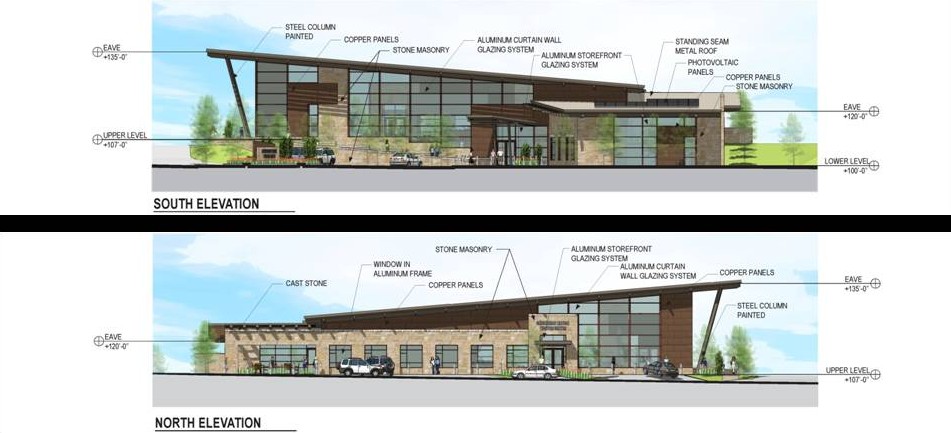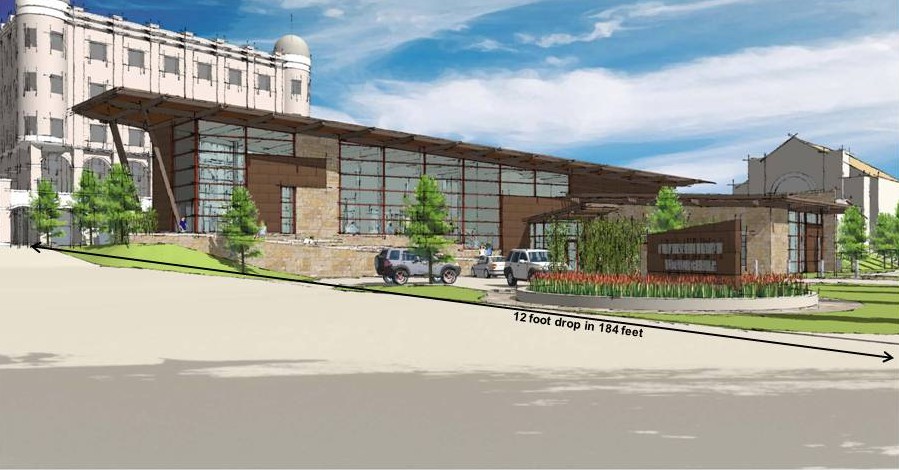
The extent of changes to the site’s topography depends on a number of factors that include the current lay of the land (flat, rolling or steep) the size of the property, the need or the desire to minimize the disruption to the natural lay of the land, if the land is undisturbed soil or if it has been previously changed, whether the land can be made usable through changes and the nature of the development of the site. If the site is relatively flat, then not much is needed to introduce the development, but some shaping is typically required as few pieces of land come with ready-made building pads and pathways for roads and walks. Continue reading
Category Archives: Design
Blueprints / what are they – what are they good for
Blueprints-what are they
The term “Blueprint” is a common name for printed building plans that actually grew out of the printing/developing process that rendered a large sheet of paper blue resulting with white lines on a blue background. This was replaced by the diazo print process that used ammonia gas as the developing agent and changed the look to blue lines on white background. Young graduates were delegated to running the prints when needed and there are many from that era that surely passed out on occasion from the obnoxious ammonia fumes. We gladly shoved the FSB ammonia printer out one of the upper floor windows years ago when the new technology introduced electrostatic plotters that produce a copier quality product on a large paper format which appears as black lines on white background. Continue reading
Filed under Construction, Design, Materials
The S… That Came In From The Cold
The 1965 film adaptation of the novel by John le Carre with the same title stars the ever charismatic but mysterious Richard Burton. While the film is based on the cold war spy industry and is steeped with figuring out who are the real undercover agents and possible defectors, our story is much simpler but hopefully does not have a tragic ending like the movie.
The S… coming in from the cold in our case is the structure that is continuous from interior to exterior and entails figuring how to limit the baggage it is trying to carry from the outside to the inside. The baggage is the transmission of the exterior cold to the inside conditioned space of the building. In reality the physics of the situation is that heat is being lost at such a rapid rate through the structure to the cold exterior that it lowers the temperature of the inside structure near the perimeter to the point where moisture in the air will condense on the surface and drip down on interior finishes. Bad situation. Continue reading
Filed under Construction, Design, Materials
Breaking News and Coming Attractions
LEED Certification
The FSB Team has been working hard to achieve Platinum certification which is an ambitious goal and corresponding number of points. We were pursuing 81 possibly 82 total points with 80 as the minimum threshold. There are some points we cannot achieve because downtown Sulphur does not have the density of a larger metropolis or public transit. We are getting a healthy number of points for the energy efficiency of our heating/cooling system but not all we had hoped for. With these not panning out, we are falling a few points shy of the number needed for Platinum. But it’s full steam ahead to assure Gold certification which is a small step away from Platinum, still very challenging and impressive to achieve. Continue reading
From The Inside Out
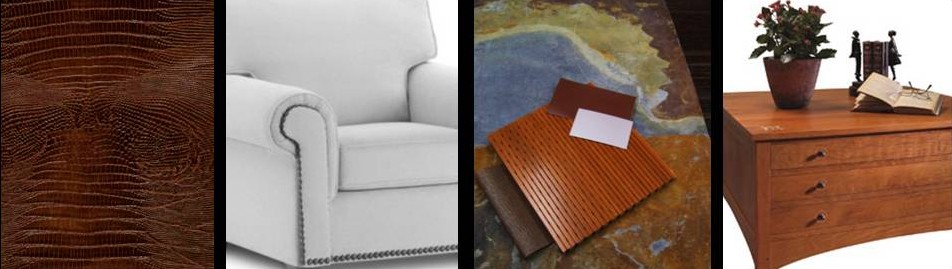
Interior design is today a broad field of skill sets, but the part we invariably relate to the design profession is the interior feel of a space which is largely influenced by the materials we see, walk on and touch. It’s like an artist’s brush that has been stroked across the interior surfaces creating a mixture of colors, textures and visual excitement. While the creativity comes from the designer, the direction is once again cast by the goals and objectives set by the client. The interior designer transforms the desired effects and feelings to be evoked into a palette of materials that together speak the language of the room to those who visit and experience the space. Continue reading
And The Beat Goes On…
While thinking of the design being something that continues on I could not help but flash on the classic ‘60’s hit, its syncopated driving bass line and closing lyric “and the beat goes on.” The 1967 pop hit is none other than “The Beat Goes On” written by Sonny Bono and sung by Sonny & Cher. Perhaps I’m giving up my generational age but the driving force of a project is the design and all the reasons it is what it is become the lyrics and legacy of the building as it lives on.
We’re into the final design phase of the Visitor Center. We have had preliminary design review meetings with the client and we have also had time to reflect on how well the design is achieving the project goals, LEED objectives and that the aesthetic character is right. The goals and objectives are more a matter of checking things off the list, but aesthetics are very subjective and we rely on an artistic maturity and the feeling that we created something special for the client. We get a thumbs-up from the Chickasaw Nation; that feels good. Continue reading
Design / the continuous thread
Design
When does it begin; when does it end? Design has its beginnings in the early dreams and vision of the client. Formalized design activity comes into play when the design professional engages in the project. These formal stages of preliminary design and final design initialize and refine the big idea respectively. While preliminary design creates the first generation of site and plan organization, final design investigates and resolves how the building components begin to integrate with one another. Final design sets the stage and direction for how the materials will blend and transition throughout the building. The pieces and parts of the architecture and engineering systems come together to form a composition of assemblies. These include floor assemblies, wall assemblies, ceiling assemblies and roof assemblies. However, the design effort does not end with final design. Continue reading
Filed under Construction, Design, Interior, Materials
Preliminary Design / the end of round one
The architectural character and palette of materials were outlined in the previous post on the “trail to creativity.” The materials must now be orchestrated into an expression of form that creates visual and physical texture. The designer is challenged with how those elements integrate with each other and flow from one the next to create architectural interest and character. It is all too easy to only think of the site and floor plan as flat planes. While the site and floor plans are represented as 2 dimensional illustrations, the challenge is to be thinking of the site and building as a 3 dimensional elements concurrent with working out the site grades, views, circulation, building access, building space needs, groupings, adjacencies and flow.
The integration of the architecture and engineering systems cannot be an afterthought to design; something left to chance. The results of this approach can be disastrous. So as the site and plans evolve, the designer must be thinking of how engineering systems are woven into the architectural solution. At times the engineering systems themselves become exposed expressions of the architecture. Continue reading
Design / the trail to creativity
While defining the project, i.e. the problem, is paramount to arriving at the right solution, problem solving is at the heart of the design process. This is the primary skill of the design professional and it’s the challenge that keeps us charged and alive with creativity. As we engage ourselves in the creative process, each discipline must reflect on the project needs identified in the charrette then overlay it with the sustainable design criteria identified in the LEED workshop. Continue reading
LEED / how green is green
At the beginning of every project, FSB has an in-house, multi-discipline brainstorming meeting to explore how to apply sustainable principles to the design of the project. If we are pursuing LEED certification, we expand our discussions into a LEED workshop where we investigate the various points that can or cannot be achieved for the project using the USGBC checklist. This is an all disciplines on deck exercise as LEED points cover the spectrum of architecture and engineering systems, materials and design considerations. As you recall, our goal is to achieve LEED Platinum the top prize valued at 80 points.
(new post each Tuesday. coming next: The Design/putting on the ritz) Continue reading


.
.