Category Archives: Materials

Submittals – their role in the built environment

In the project schedule shared with you in a previous post, the first activity line shown was Submittals. This is an early and critical activity that serves as the process for eventual approval of all the materials and fabricated items that will become a part of the construction of the project. Submittals include items like shop drawings, product literature, samples, reports from testing agencies, operating instructions, installation instructions, maintenance instructions and warranties.

The above photo shows rebar that was submitted to FSB on October 10, 2012, approved on October 23, 2012 which as then fabricated and sent to the job site and assembled into the cages shown awaiting a pour of concrete to arrive that will transform it all into one of the spread footings for the Visitor Center. Continue reading

Leave a comment

Filed under Construction, Materials

The First Pour – a notable milestone

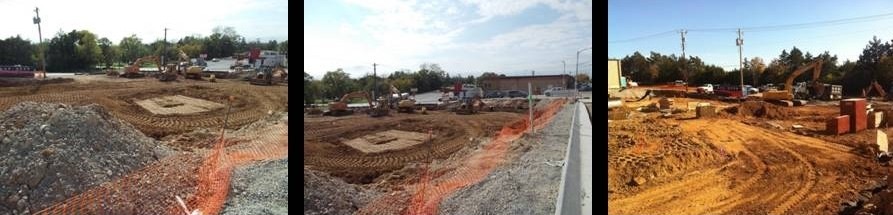
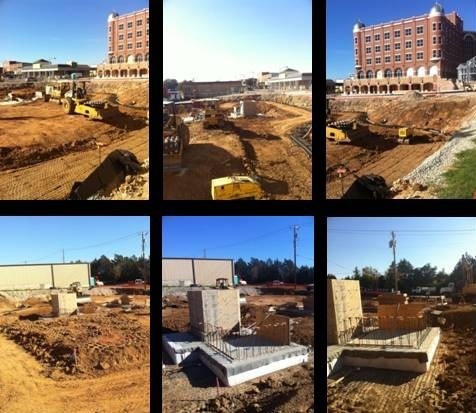
The primary activity over the past couple of weeks at the job site has been bringing in select earth fill by the truckload followed by compacting it with large earth work equipment. The one piece of equipment that does the major job is the sheep’s foot roller that shows up in the overall site photos. In the photos above you can see familiar neighbors including the Donut Palace and Artesian Hotel

The modified French drain as been effective in intercepting the water that continues to seep into the site from the north and east edges of the property. The following series of photos shows the construction of the French drain. The drain is created in the following steps:
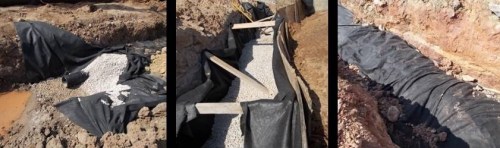
The trench is dug and lined with filter fabric which allows water in but keeps out silt and mud that can clog up the drain assembly.

Drain pipe which is a special pipe that is perforated on the sides and solid on the bottom allows water to seep in and flow. The pipe must have some slope from the high point to the low point of discharge to have water collect and flow properly.

Gravel is the next ingredient. The drain pipe sits on a shallow bed of gravel which then surrounds the sides and top of the pipe to a greater depth.

The Contractor has been preparing for the “First Pour.” This is always a noted milestone in the construction timeline and depending on the scale of the project can be a large operation. However, it is regardless a significant tick mark for any project.

The activity I’m referring to is the first time that mixing trucks show up at the job site and concrete is poured into forms. The First Pour for the Visitor Center was the concrete slab located in the elevator pit. It is located in the bottom of the elevator shaft and represents the lowest slab in the project.

The concrete side walls of the elevator shaft are being formed and it won’t be long before there will be a 2nd , 3rd and 4th pour on the site.

On another note, today is election day. So, exercise your right to vote.

Leave a comment

Filed under Construction, Design, Materials

Getting to Know the Players – Take Four

Interview by Fred Schmidt

I was recently at the AIA Oklahoma State Convention in Tulsa, Oklahoma gathering “continuing education units” (CEU’s) that are needed for architects to maintain their professional license. This was a 2 day event where you could sock away 12 CEU’s which equates to one year’s worth of credits. The convention is typically accompanied by a Trade Show where vendors, consultants, suppliers and contractor types have set up booths and share information regarding their product or company with the attendees of the convention.

While touring the booths, I came across a product that looked very familiar. Continue reading

Leave a comment

Filed under Guests, Materials

Developing the Construction Schedule

The project continues to work towards getting out of the ground. Sometimes it’s easy and straight forward and sometimes it’s not. In the October 9th Post titled “Sitework-solutions thru teamwork,” in order to stabilize the wet soil in the center of the site, the team agreed on an approach to push rock into the sub-grade to create a stable structural base. While this approach has a history of success, it’s no guarantee it will work and in our case it was not a successful approach. Instead of stabilizing the soil, the rock kept sinking into the soil and the ground was like chocolate pudding with chocolate chips in it. Continue reading

Leave a comment

Filed under Construction, Materials

Local Beta – a kindred spirit

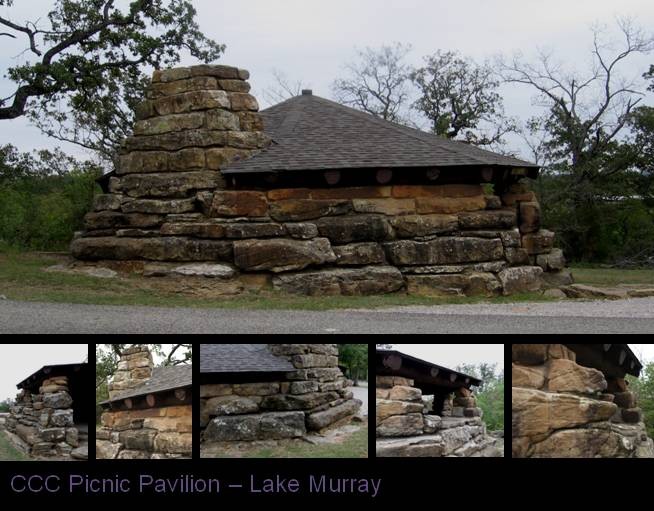
One of the inspirations for the architectural character for the Chickasaw Visitor Center is the historic architecture located in the national park land now known as the Chickasaw National Recreational Center in Sulphur, Oklahoma. These historic structures were built by the Civilian Conversation Corps (CCC) between 1933 and 1940. Amazingly in 1914, Platt’s visitation exceeded both Yellowstone and Yosemite and was second only to the Hot Springs Reservation in Arkansas.  The objective of the CCC Company #808 at then Platt National Park was to protect and conserve the park’s resources which was receiving an enormous amount of wear for a park its size.

President Franklin D. Roosevelt’s “New Deal” program reduced unemployment during the great depression by providing work for the more than 3 million young men who enrolled in the program. The CCC initially focused on reforestation, but that soon grew to include soil conservation and the creation of recreational park facilities which included aiding the establishment of some 800 state parks across the country. The overall effort was a collaboration of other “New Deal” programs that included the Works Progress Administration (WPA) and the National Park Service. One of those new parks was located in southern Oklahoma in Chickasaw Country and is one of the many area attractions that visitors can learn about at the Chickasaw Visitor Center. Continue reading

Leave a comment

Filed under Construction, Design, Materials

Sitework – solutions thru teamwork

Work in Progress…

Here you see a photo from a few months earlier along with the current condition of the site. The contractor has been attacking the ground with vigor and the result has been a somewhat unanticipated seepage of water coming out of the embankment of earth seen in the background of the photo on the right. The water seems to have been pent up on one of the layers of earth about 6 feet below the level of Muskogee Avenue on the north edge of the site. The water in this case is referred to in engineering and construction terms as “perched water” and has turned the site in to a muddy mess. Continue reading

Leave a comment

Filed under Construction, Design, Materials

Connections

When I think of connections, I am reminded of the song with the line that includes “the hip bone is connected to the thigh bone” and all the connections from head to toe that are part of the lyrics. The actual song title is Dem Dry Bones. There have been a lot of spin offs from the original song that have turned into a whole series of kids learning lessons and an interesting game called “Hip Bone Games” for all ages that is a game about connections.

The Visitor Center is all about connections. And not just all those that are about linking people, places and ideas of which there is an abundance. Those connections are important to the FSB design team but when it comes to the executed design of the building and it’s systems it’s all about the physical connections that hold all the pieces and parts of the building together. For the building, it starts with the structure or the skeleton of the building which brings me back to the thought of the hip bone being connected to the thigh bone. The skeleton of the building holds everything up and everything in turn is then connected to and integrated with it like the skin, circulatory systems, respiratory systems and the body control center. Continue reading

Leave a comment

Filed under Construction, Design, Materials

Collateral Forces

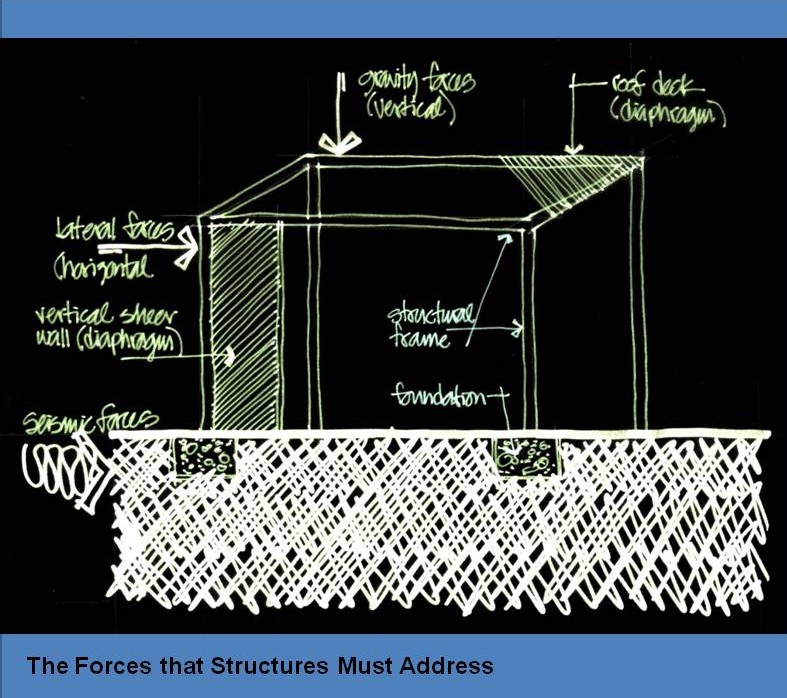
The building structure is the supporting frame of the building. It is designed to withstand the vertical forces imposed on the building which include the weight of the building materials, the weight of the things in the building (people, furniture, files, etc.) and weight imposed externally, like snow on the roof, equipment, etc. The building must also resist lateral forces. These are horizontal imposed forces on the building structure and are primarily wind loads. The other forces that the building structure must resist are seismic forces which are the result of ground movement. The vertical forces are relatively static loads, however, when lateral forces are applied to the structure, they try to push it over and in the process try to twist and rack the structural frame. Continue reading

Leave a comment

Filed under Design, Materials

The Things That Go Bump In The Night

A popular title for the fearful things that can take place during the nighttime. But do you ever worry about your building falling over during the night. I think structural engineers do; it may be their worst nightmare.

So, what holds a building up? What gives the building a sound and solid footing on mother earth? Continue reading

Leave a comment

Filed under Construction, Design, Materials

Slicing and Dicing

It sounds like a Veg-O-Matic demonstration guy at the state fair at the end of which you’re not sure what all got chopped up. The slicing and dicing of the building, however, is done much more systematically and carefully so you can actually tell what has been cut through.

I know it’s hard to imagine, but the building that is drawn in the computer is a full-scale 3D model of the real thing. Slicing up the building in the computer provides details that are referred to as sections. By slicing through the building in various directions it allows us to see what is going on inside the spaces. That includes the spaces inside the walls, the spaces above the ceiling, the spaces below the floor and more. These views let us see how the pieces and parts of the building go together. When the plans are printed out, they are scaled down and floor plans are usually shown at 1/8”=1’-0”. It would take a lot of paper to print it out full-scale. Continue reading

Leave a comment

Filed under Construction, Design, Materials