Groundbreaking – a celebration of life

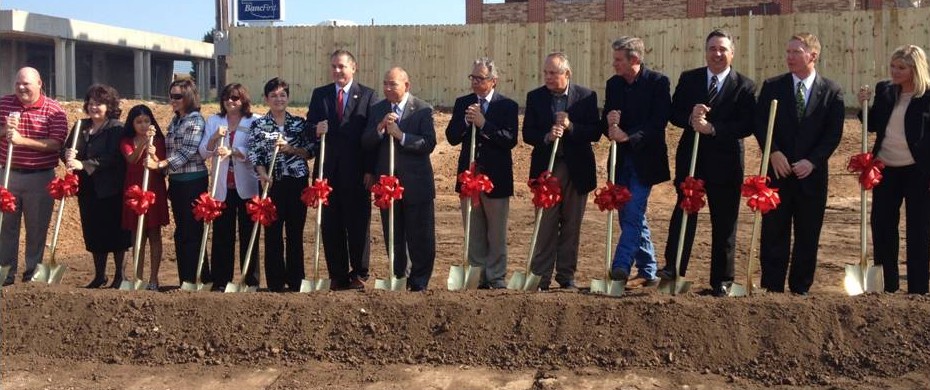
Groundbreaking is the celebration of new life. It’s the celebration of a new beginning; the beginning of a new project and the beginning of breathing life into a building with the start of construction.  Groundbreaking is a traditional ceremony around the globe signifying the beginning of construction. Although the “ceremonial groundbreaking” may actually take place some time prior to the beginning of construction it is a ceremony that allows the owner to celebrate the beginning of a new project with friends, dignitaries, businessmen and special guests. Continue reading

2 Comments

Filed under Construction, Guests

Local Beta – for the spirit of it

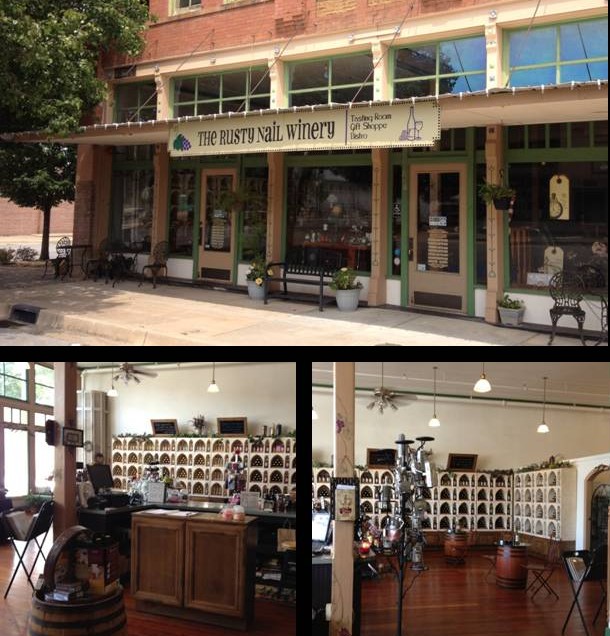
Muskogee Avenue is the old historic downtown of Sulphur, Oklahoma and two short Sulphur blocks west of the Visitor Center site on Muskogee Avenue is another local establishment of interest. The Rusty Nail Winery touted as a “Boutique Winery nestled in the Heart of Historic Downtown Sulphur” is located on the NE corner of Muskogee and 3rd Street. They were the 45th winery to get a license in Oklahoma and are getting ready to celebrate their 2nd anniversary on September 22, 2012.

The building in which they are located was constructed in 1906 as a hardware store. Over the years it has been a lumber store, antiques shop and sandwich shop. The upstairs was a boarding house. The winery occupies all of the first floor with the front portion set up for tasting and sales. Some day the owners hope to convert the upstairs into a bed and breakfast. They are open from 4-8pm Monday through Friday and Noon to 8pm on Saturdays. Continue reading

Leave a comment

Filed under Guests

The Road Ahead – and then some

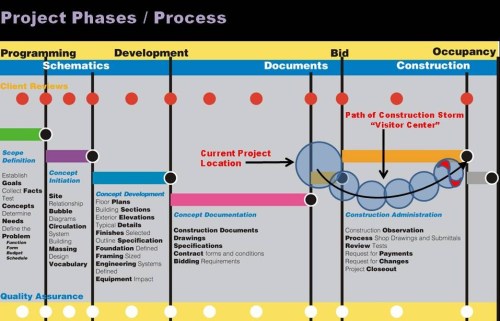
The Path of Construction

The project has come a long way, but there is plenty of road ahead to navigate. FSB has guided the project from its inception to the current location in the project timeline. We have traveled together from project definition (programming), schematic design (preliminary design) and design development (final design) through construction documents (construction drawings and specifications). FSB, the Chickasaw Nation (owner) and Flintco (contractor) are currently working together to assemble and test the price of construction.

The road ahead is filled with construction activity, but not all of it involves physical activities at the job site like moving dirt, pouring concrete and setting steel. The early months of construction are busy with organizing the project so that all of the physical activities can move forward as smoothly as possible.

The contractor has responsibility for a number of these early management and organizational activities. These include:

Preparing a list of all subcontractors and suppliers; this list is submitted to the Architect and Owner for their review and approval. The Owner may request the replacement of a subcontractor and there is a process for evaluating the impact if any to the project schedule and cost.

Preparing a construction schedule; this is a breakdown of activities by trades and cost categories from the beginning of the project to project close out at the end of the road. These schedules are typically created in software that is designed to track manpower and costs and is a powerful tool for the contractor in performing their job as well as effectively communicating the schedule to the Architect and Owner.

Preparing a Schedule of Values; this document breaks down the entire cost of the project by trades, labor and materials. This document once approved by the architect becomes the basis for monthly applications for payment and tracks the percentage of completeness of each item in the schedule.

Preparing a Schedule of Submission of Shop Drawings, Product Data and Samples; this document outlines a chronology for when each required shop drawing, product and sample will be submitted to the Architect for review and approval. The timeline of these submissions typically parallels the construction schedule so that the early construction activities are also the initial submissions.

FSB as architect and engineer of the project has the responsibility to review and approve the above submissions and advise the owner of any concerns. The entire process continues to be a team affair with the architect, owner and contractor working closely together to achieve the common goal of the completion of a great project.

Upcoming Events

More Local Beta

There are more interesting places to visit in the vicinity of the Visitor Center.

Getting to Know More Players

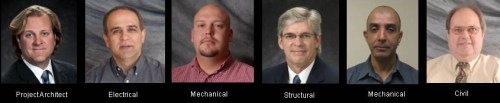
Here are some more of the Design Team that I plan to corral for an interview in the near future.
I’ll keep you posted…

Leave a comment

Filed under Construction, Guests

The Newest Team Member – selecting a contractor

There is a point in the life of a project as it moves towards the fruition of being an addition to the built environment that it is ready for construction. This means that another member needs to be added to the overall team whose services include constructing the project. The new team member we are talking about is the contractor. Up to this time it has primarily been the owner and architect working together to define and design the project. Continue reading

Leave a comment

Filed under Construction, Design

Collateral Forces

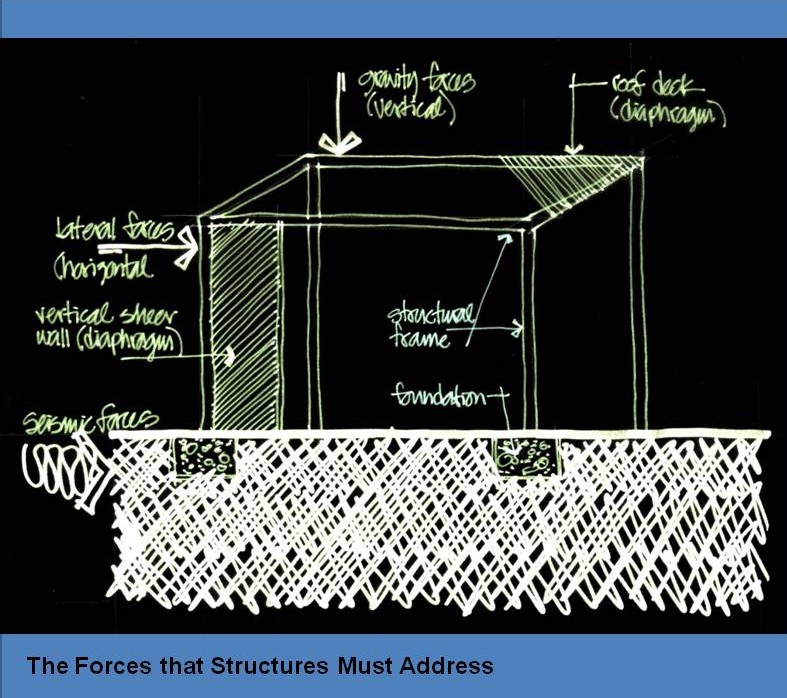
The building structure is the supporting frame of the building. It is designed to withstand the vertical forces imposed on the building which include the weight of the building materials, the weight of the things in the building (people, furniture, files, etc.) and weight imposed externally, like snow on the roof, equipment, etc. The building must also resist lateral forces. These are horizontal imposed forces on the building structure and are primarily wind loads. The other forces that the building structure must resist are seismic forces which are the result of ground movement. The vertical forces are relatively static loads, however, when lateral forces are applied to the structure, they try to push it over and in the process try to twist and rack the structural frame. Continue reading

Leave a comment

Filed under Design, Materials

The Things That Go Bump In The Night

A popular title for the fearful things that can take place during the nighttime. But do you ever worry about your building falling over during the night. I think structural engineers do; it may be their worst nightmare.

So, what holds a building up? What gives the building a sound and solid footing on mother earth? Continue reading

Leave a comment

Filed under Construction, Design, Materials

Media at Your Doorstep


Tales of Things to Come

The FSB Blog has been generating interest globally but has also caught the interest of local media. If you are interested in all things Oklahoma, which would naturally include the FSB Blog featuring the Chickasaw Visitor Center, Oklahoma now has an international exposure thanks to OklaVision. The broadband network features a live weekday news cast, OklaVision Live, along with special feature videos of varying length. The focus is on the people, places and items of interest in Oklahoma. The live broadcast is generated at the American Indian Cultural Center and Museum in Oklahoma City and the studio is located in the one building that is completed to date on the campus. You can tune in to the live broadcast Monday through Friday from Noon to 1 p.m. CST. I catch it on cable TV channel 3.

One of OklaVision’s recent videos is a special on Chickasaw Country Continue reading

Leave a comment

Filed under Design, Guests, LEED ®

Slicing and Dicing

It sounds like a Veg-O-Matic demonstration guy at the state fair at the end of which you’re not sure what all got chopped up. The slicing and dicing of the building, however, is done much more systematically and carefully so you can actually tell what has been cut through.

I know it’s hard to imagine, but the building that is drawn in the computer is a full-scale 3D model of the real thing. Slicing up the building in the computer provides details that are referred to as sections. By slicing through the building in various directions it allows us to see what is going on inside the spaces. That includes the spaces inside the walls, the spaces above the ceiling, the spaces below the floor and more. These views let us see how the pieces and parts of the building go together. When the plans are printed out, they are scaled down and floor plans are usually shown at 1/8”=1’-0”. It would take a lot of paper to print it out full-scale. Continue reading

Leave a comment

Filed under Construction, Design, Materials

Getting to Know the Players-Take Two

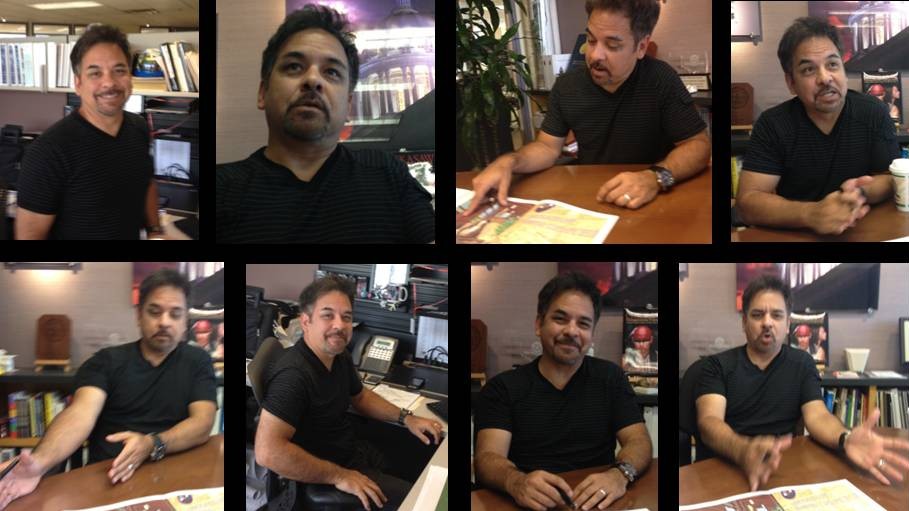
So it’s time to meet another member of the FSB design team. That would be George Dunlap, Senior Project Designer. He’s a talented architect and really good designer; you can reaffirm that yourself by revisiting to the Post “Preliminary Design-putting a wrapper on round one.” He tends to be on the reserved, quiet side that is until you talk to him about his passion “Design.”

Ready?

George: Oh Sure. Continue reading

Leave a comment

Filed under Design, Guests, LEED ®, Materials

The Power of Electrons – the joules of design

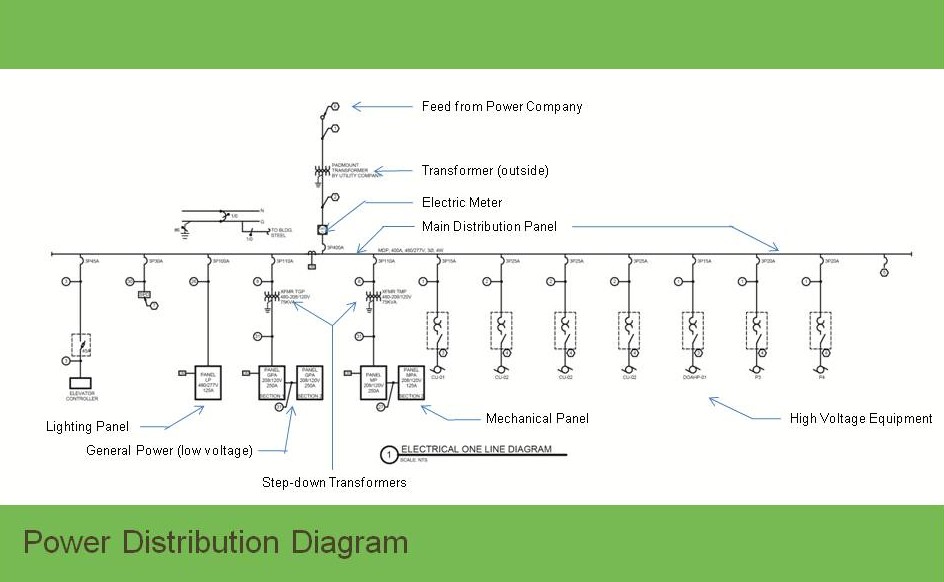
Power. We seem to take it for granted but are reminded during storm season that it can be extinguished with one strategic lightning strike or a fallen tree or broken power pole. I haven’t shared much about the electrical engineering side of the project, but it is an important design element to the Chickasaw Visitor Center. The electrical system powers the lights, outlets, pumps, heating/cooling equipment, elevator and more.

Power is often discussed in terms of voltage which is the energy required to move an electrical charge along a path where negative charged objects are pulled towards higher voltages and the flow is called current. Volts are measured in joules per coulomb. All perfectly clear, right?  Well you could always refer to Kirchhoff’s circuit laws to get everything straightened out, but wait, there’s more. Where have I heard that expression? E-gads! OK, here’s the simple version. Continue reading

Leave a comment

Filed under Design, Materials