Category Archives: Design

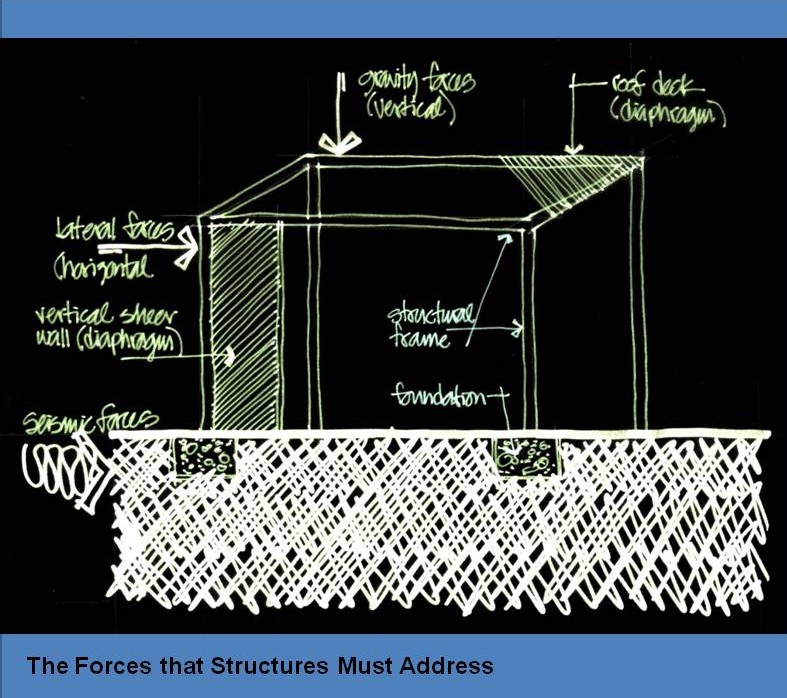
Collateral Forces

The building structure is the supporting frame of the building. It is designed to withstand the vertical forces imposed on the building which include the weight of the building materials, the weight of the things in the building (people, furniture, files, etc.) and weight imposed externally, like snow on the roof, equipment, etc. The building must also resist lateral forces. These are horizontal imposed forces on the building structure and are primarily wind loads. The other forces that the building structure must resist are seismic forces which are the result of ground movement. The vertical forces are relatively static loads, however, when lateral forces are applied to the structure, they try to push it over and in the process try to twist and rack the structural frame. Continue reading

Leave a comment

Filed under Design, Materials

The Things That Go Bump In The Night

A popular title for the fearful things that can take place during the nighttime. But do you ever worry about your building falling over during the night. I think structural engineers do; it may be their worst nightmare.

So, what holds a building up? What gives the building a sound and solid footing on mother earth? Continue reading

Leave a comment

Filed under Construction, Design, Materials

Media at Your Doorstep


Tales of Things to Come

The FSB Blog has been generating interest globally but has also caught the interest of local media. If you are interested in all things Oklahoma, which would naturally include the FSB Blog featuring the Chickasaw Visitor Center, Oklahoma now has an international exposure thanks to OklaVision. The broadband network features a live weekday news cast, OklaVision Live, along with special feature videos of varying length. The focus is on the people, places and items of interest in Oklahoma. The live broadcast is generated at the American Indian Cultural Center and Museum in Oklahoma City and the studio is located in the one building that is completed to date on the campus. You can tune in to the live broadcast Monday through Friday from Noon to 1 p.m. CST. I catch it on cable TV channel 3.

One of OklaVision’s recent videos is a special on Chickasaw Country Continue reading

Leave a comment

Filed under Design, Guests, LEED ®

Slicing and Dicing

It sounds like a Veg-O-Matic demonstration guy at the state fair at the end of which you’re not sure what all got chopped up. The slicing and dicing of the building, however, is done much more systematically and carefully so you can actually tell what has been cut through.

I know it’s hard to imagine, but the building that is drawn in the computer is a full-scale 3D model of the real thing. Slicing up the building in the computer provides details that are referred to as sections. By slicing through the building in various directions it allows us to see what is going on inside the spaces. That includes the spaces inside the walls, the spaces above the ceiling, the spaces below the floor and more. These views let us see how the pieces and parts of the building go together. When the plans are printed out, they are scaled down and floor plans are usually shown at 1/8”=1’-0”. It would take a lot of paper to print it out full-scale. Continue reading

Leave a comment

Filed under Construction, Design, Materials

Getting to Know the Players-Take Two

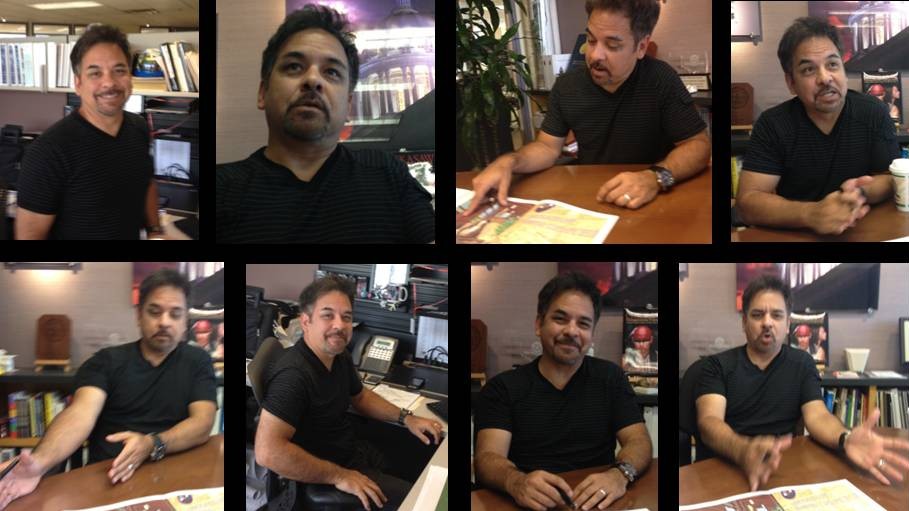
So it’s time to meet another member of the FSB design team. That would be George Dunlap, Senior Project Designer. He’s a talented architect and really good designer; you can reaffirm that yourself by revisiting to the Post “Preliminary Design-putting a wrapper on round one.” He tends to be on the reserved, quiet side that is until you talk to him about his passion “Design.”

Ready?

George: Oh Sure. Continue reading

Leave a comment

Filed under Design, Guests, LEED ®, Materials

The Power of Electrons – the joules of design

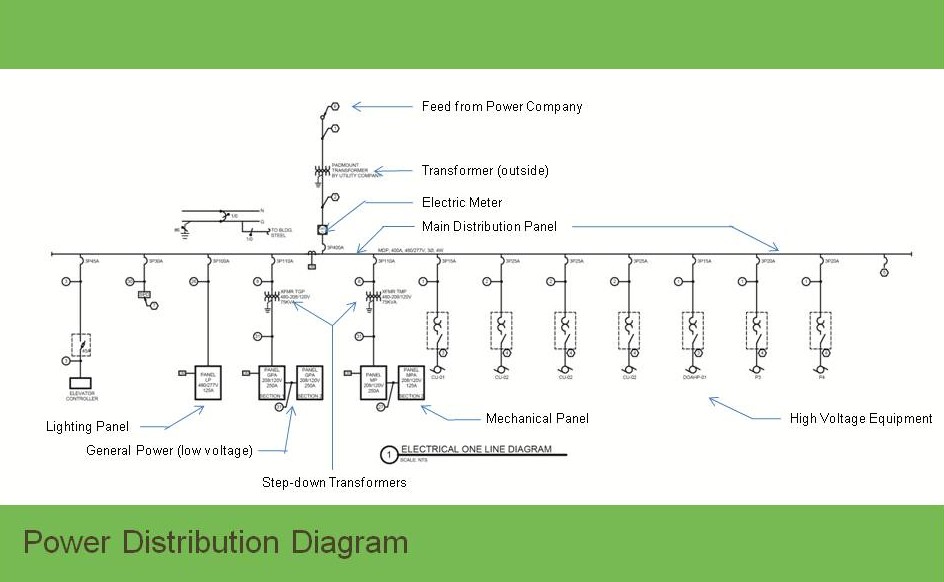
Power. We seem to take it for granted but are reminded during storm season that it can be extinguished with one strategic lightning strike or a fallen tree or broken power pole. I haven’t shared much about the electrical engineering side of the project, but it is an important design element to the Chickasaw Visitor Center. The electrical system powers the lights, outlets, pumps, heating/cooling equipment, elevator and more.

Power is often discussed in terms of voltage which is the energy required to move an electrical charge along a path where negative charged objects are pulled towards higher voltages and the flow is called current. Volts are measured in joules per coulomb. All perfectly clear, right?  Well you could always refer to Kirchhoff’s circuit laws to get everything straightened out, but wait, there’s more. Where have I heard that expression? E-gads! OK, here’s the simple version. Continue reading

Leave a comment

Filed under Design, Materials

The Gray Water Mouse Trap

Rube Goldberg was probably the most adept illustrator in creating a genre for the design of the supposedly perfect mousetrap which in fact was typically an over-designed contraption to perform a very simple task. His comic illustrations created a following as well as a common descriptive term found in the Merriam-Webster dictionary that bears his name. The “Rube Goldberg” machine contest is now an annual competition at institutions like Purdue and UC Berkeley.

Our approach to the design that traps gray water and recycles it for use in flushing other plumbing fixtures while intricate is hardly over complicated. The design is straight forward and efficient and gets right down to the business water efficiency through the reuse of waste water. The gray water system gains the project a number of key points for achieving LEED certification as a part of the sustainable goal set by the Chickasaw Nation (the Client). While the system is supported by architectural and electrical elements, it is predominantly a mechanical engineering system and the design is showcased in the plumbing section of the construction documents. Here’s how it works. Continue reading

1 Comment

Filed under Design, LEED ®, Materials

Off Color Water – seriously

Most off color references are to comic relief that is of the dark variety. But this is no joke and the off color water I’m referring to is technically known as “gray water.” So gray water is somewhere between “white water” and “black water.”  White being potable or drinkable water and black being considered sewage i.e. containing human waste which is sent to sewage treatment facilities for clean up before it is returned to the environment.

The thing is that appropriate gray water can be recycled and used for other purposes like landscape irrigation or in our case for use in flushing toilets and urinals after which the water is sent to the municipal sanitary sewer system for treatment. This is yet another way to conserve precious potable water and is also gaining the Visitor Center project LEED points. Once again, several points are in the balance for sustainable design. Continue reading

Leave a comment

Filed under Design, LEED ®

Water for the Spirit

The homelands of the Chickasaw were rooted in the southeastern states of Alabama, Mississippi, Kentucky and Tennessee and these places are the spiritual heart of the Chickasaw Nation. With their strong connection to the land there has always been a commitment to good stewardship of the earth that provides for their prosperity.

The Chickasaw culture and heritage have always had roots in nature and the elements and water has always been an important and spiritual part of their life. They typically developed their settlements along rivers and historically dominated much of the waterways between the Gulf of Mexico and the Ohio valley region. The waterways also provided an opportunity for trade which greatly benefited the tribe.

With water having such a strong influence on the history and culture of the Chickasaw, it was decided during the design phase to incorporate a water feature as a part of the Visitor Center to make this element a part of the experience for visitors. Continue reading

Leave a comment

Filed under Background, Design, Materials

Harvesting Rain – a precious commodity

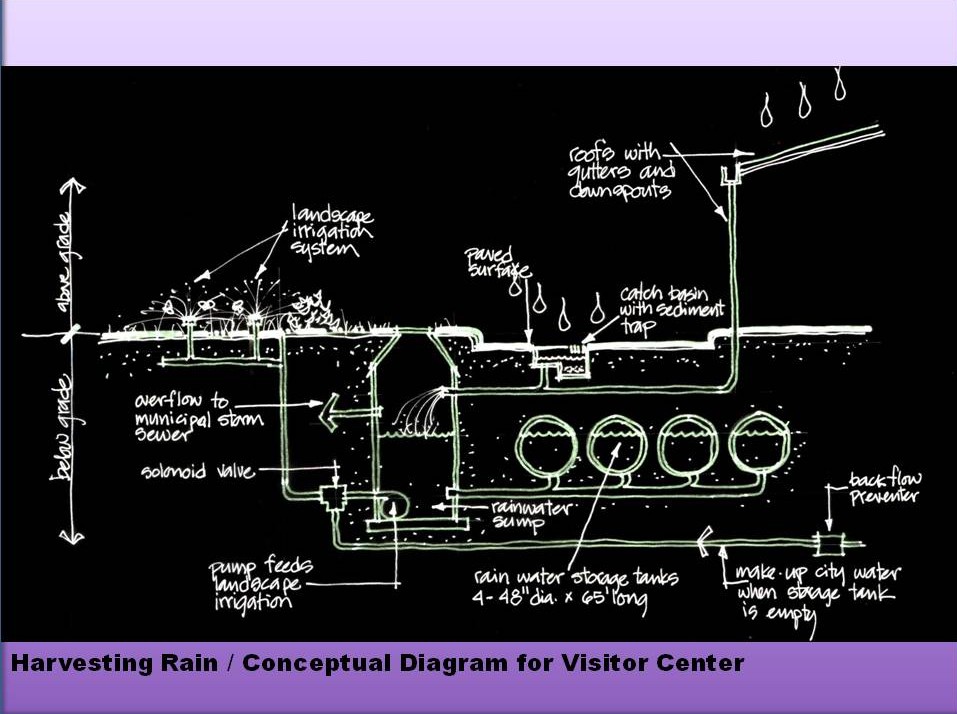
Stormwater is a primary source of water in many parts of the world and a sustainable approach to the control and use of rain water is something that should be taken to heart. As part of our pursuit of LEED certification for the Visitor Center, a significant number credit points is being gained from the incorporation of a Rain Harvesting system. Up to 6 points are in the balance based on being able to achieve 3 specific credits well. The credits are as follows: Continue reading

1 Comment

Filed under Design, LEED ®, Materials